Speaker : 李嘉宁博士
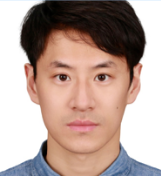
Dr. Jianing Li is a postdoctoral researcher at the Physics Institute of Heidelberg University and a long-visiting researcher with the ALICE group at the GSI Helmholtzzentrum fiirtermSchwerionenforschung. He received his Ph.D. from Tsinghua University in June 2023. After his doctoralstudies, he worked as a postdoctoral researcher at the Institute of Modern Physics, Chinese Academy ofSciences, and Central China Normal University before moving to Germany. His research focuses on thetheory and phenomenology of heavy-ion collisions, with particular interests in exploring the properties of strongly interacting matter under extreme conditions
Abstract:
The QCD phase transition represents the transformation of nuclear matter under extreme conditionsof temperature and density, where quarks and gluons transition from confinement within hadrons to adeconfined state known as the quark-gluon plasma. Understanding this transition is a cornerstone inexploring the properties of strongly interacting matter and provides essential insights into theconditions of the early universe moments after the Big Bang. The beam energy scan program inheavy-ion collisions provides a unique window for exploring these critical phenomena by varying thetemperature and baryon chemical potential of the created matter. At high collision energies,experiments have successfully observed a crossover behavior consistent with lattice QCD predictions.However, as the collision energy decreases, the extraction of critical signatures becomes increasinglychallenging due to substantial non-critical background contributions. In this talk, I will introduce ourrecently proposed cross-rapidity cumulant observable, which is designed to suppress non-criticalfluctuations arising from global baryon number conservation and provide a cleaner probe of criticaldynamics in heavy-ion collisions.
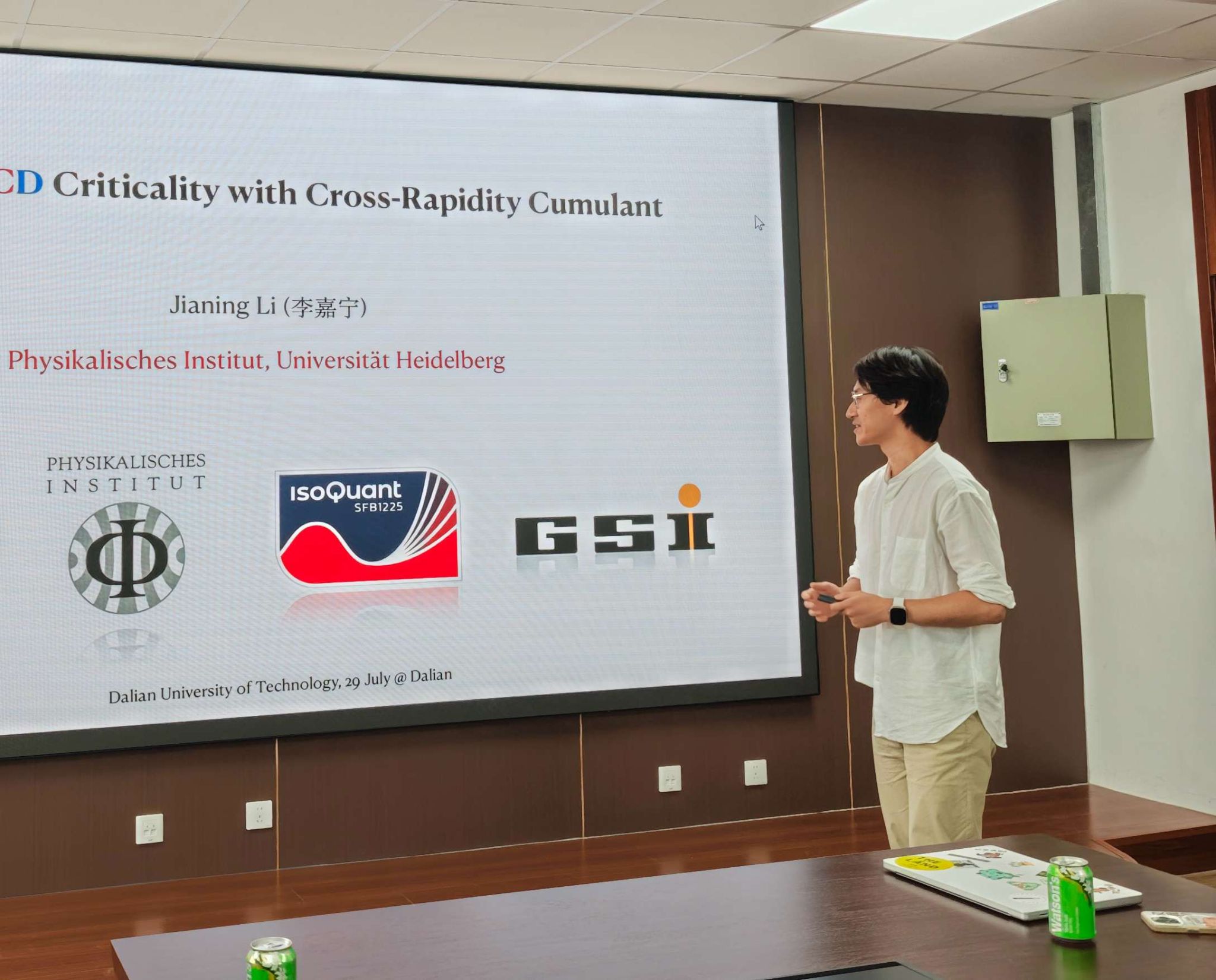
Host: Prof. Wei-jie Fu
2026-07-29, 14:00,
Room 216, Hou-yi Building
